
Julie Lafleur: Helping Women Trust Their Own Energy in an AI World
“Your body holds intelligence. Many of the answers we are chasing are already inside us.”
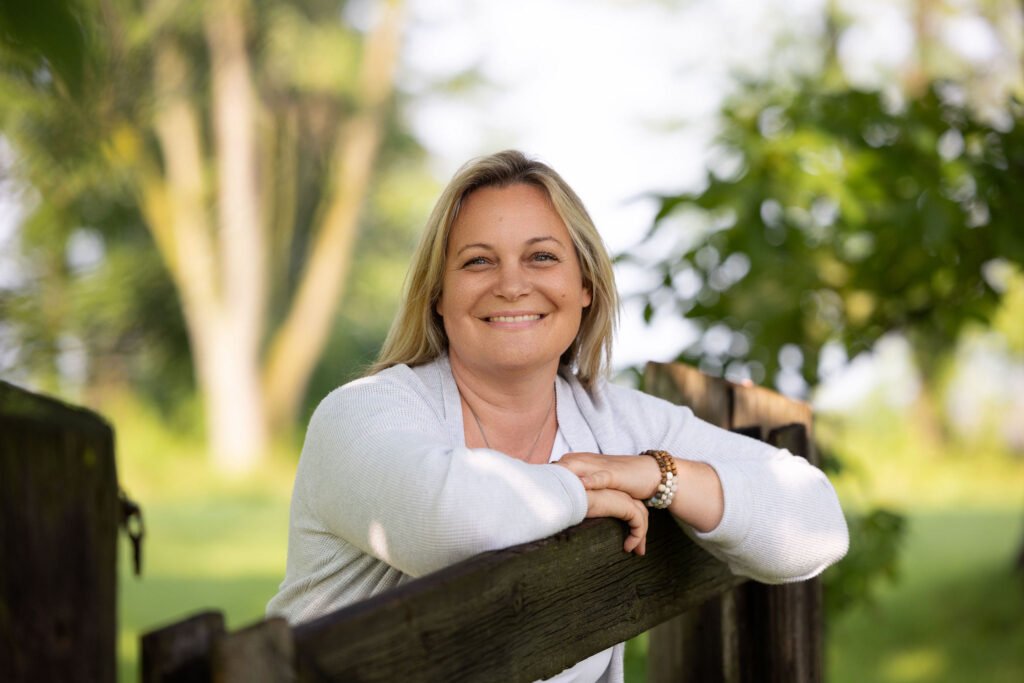
Imperial Council Member, Julie Lafleur
On a typical Tuesday, you might find Imperial Council member Julie Lafleur at an ice rink before sunrise, watching her son skate, then walking her dog and easing into the day with small rituals that help her feel present. Later, she might be guiding a client through a simple practice to calm their nervous system, facilitating an energy routine for a corporate team, or helping leaders think through what AI really means for their people. After more than 20 years in the corporate technology world, Julie now works at the intersection of leadership, human wellbeing, and emerging technology. Her focus is simple and profound. When people feel better, they lead better.
By evening, she is often back in the kitchen, making a nutritious dinner and listening to her family talk about their day. For Julie, work and life are not separate lanes. Learning how to feel better, think clearly, and make space for joy is both her personal practice and the core of what she teaches.
Listening to the Body Before the Burnout
For a long time, Julie believed the answer to stress and overwhelm was to push harder and figure things out faster. Burnout interrupted that story and became one of her most important teachers.
If she could put one message on a billboard for women, it would be this. Your body holds intelligence. Many of the answers we are chasing are already inside us. The work is to quiet our lives enough to hear them.
Today, when she speaks about leadership or decision-making, she does not start with strategy decks or productivity hacks. She starts with signals. Tightness in the chest. A racing mind. Exhaustion that does not lift. A subtle sense that something is off, even when everything looks fine on paper.
When we learn to listen to what the body is telling us, our choices change. We make better decisions, think more clearly, and take better care of ourselves. Julie also sees this shift ripple outward. It changes how a woman leads, how she relates, and how people around her experience her presence.
The Person You Call When You Feel Stuck
If you were to call Julie late at night because something felt tangled, you would probably not start with a clear, linear story. Most people do not.
People tend to reach out when they feel stuck in an emotion, a situation, or a symptom they cannot move through. They might feel overwhelmed, exhausted, frustrated, or mentally knotted. Sometimes they know exactly what is happening. Sometimes they simply know that something does not feel right.
Julie’s strength is helping people slow things down enough to understand what is actually going on and what their body or mind might be trying to say. She often works with women who are at the center of everything in their families, workplaces, and communities. That center is often where women provide immense value and where they shine. It is also where they can start to quietly disappear from themselves.
When women reconnect with themselves, Julie sees their clarity, energy, and leadership shift. Their presence changes. The way they make decisions and interact with others changes too. The tools she uses can range from ancient practices that help regulate the body and emotions to modern tools like AI that reduce mental load and create more space for what matters. The common thread is always self awareness.
Two Worlds in One Room
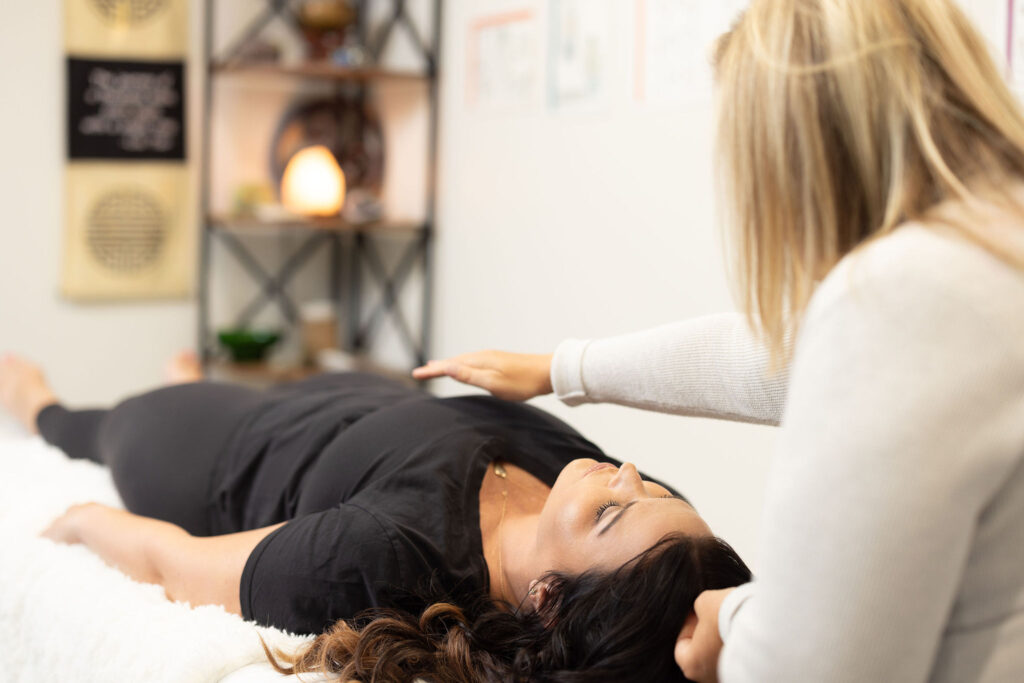
One moment that has stayed with Julie happened during a corporate workshop for two technology companies that needed to collaborate on an initiative. She had been asked to lead the group through an energy routine before an afternoon of brainstorming.
Her heart was pounding. It was the first time her two worlds were truly colliding in a visible way. On one side was the corporate tech environment where she had spent two decades of her career. On the other was the energy medicine work she had been studying and practicing.
She was nervous. Her inner critic was present and loud.
Then, something shifted. The room began to soften.
As she guided the group through the routine, people started to relax. Many closed their eyes. Some stayed with certain techniques longer because they were clearly feeling some relief. You could feel the energy in the room change.
The rest of the afternoon was dedicated to collaborative, open-minded thinking. That is exactly what happened. The group was more engaged, more creative, less guarded and more willing to hear each other than they had been at the start of the day.
Afterward, several people approached her with questions about their own energy and how they could feel better. That experience confirmed something important for Julie. The work she was bringing into the room was useful and needed, even in very traditional corporate spaces. Her two worlds did not have to stay separate.
A Gentle Redirection for Women at the Center of Everything
There is one pattern Julie sees often enough that it makes her quietly ache. She sees women slowly losing themselves while holding everything together for everyone else.
Women are frequently at the center of many moving parts. Families. Teams. Communities. It is usually where they add immense value. It is also the place where they most easily disconnect from their own needs, energy, and joy.
What she suggests instead is simple, but not always easy. Make space to understand yourself again. Pay attention to what gives you energy and what drains it. Notice what brings you joy and what helps you feel most like yourself. When women reconnect with themselves in that way, she sees their clarity shift and their energy return. Their leadership changes too.
The Practice She Returns to When Things Get Loud
When things feel noisy or overwhelming, Julie returns again and again to a practice called EFT tapping.
It is a simple technique, yet she has seen it be surprisingly effective in calming the nervous system and helping emotions move through the body instead of getting stuck. She has watched people shift stress, fear, frustration, and even physical tension in a short period of time.
For her personally, tapping is a way to reset when her mind is spinning or when she feels pressure building. Once her nervous system settles, clarity usually follows.
Standing at the Intersection of Wellbeing and AI
Right now, Julie is especially energized by the intersection of wellbeing and AI.
AI is evolving quickly, and with it comes both opportunity and pressure. Many people feel curious and excited, while also carrying a quiet tension about what this pace of change means for their work, their identity, and their future.
What interests Julie most is not just how to use AI, but how to develop the human skills that allow us to use it well.
AI is a powerful thinking partner. A tool that can help organize ideas, reduce mental load, and give people back something many feel they are losing: time and space.
It also opens up new ways of creating and expressing ideas. Things that once felt difficult or out of reach, like writing or building, can become more accessible. It can help connect dots that feel intuitively related but are hard to articulate, making patterns and possibilities easier to see.
It can also support how individuals and organizations approach complex problems, uncover insights, and build in ways that weren’t previously possible.
At the same time, Julie believes that as our technology becomes more powerful, our internal intelligence becomes more important.
By internal intelligence, she means our ability to notice what’s happening in our body, our emotions, and our thinking, and to use that information to make decisions. In a world that is moving this quickly, it’s easy to move through our days without noticing those signals.
Without that ongoing practice of checking in and recalibrating, the pace of change can create stress in the body, noise in the mind, and a sense of disconnection from ourselves. And that doesn’t just affect how we feel. It affects how we think, decide, and lead.
This is where her work comes in.
Drawing on her experience across both corporate technology and ancient wisdom traditions, she helps people stay connected to themselves so they can engage with AI from a place of clarity instead of overwhelm.
Why Empressa Feels Like the Right Room
Julie was drawn to Empressa because she does not believe women should be on the sidelines of the AI conversation. AI is shaping how work happens, how decisions are made, and how systems are built. She believes women’s perspectives, experiences, and points of view must be part of that process.
To her, Empressa feels like a space for capable, curious women who want to understand these tools and work with them in responsible, creative ways. It is a place where women can explore, learn, lead, and shape the future together.
If you want to stay connected to Julie’s work, you can find her at:
To be in community with Julie and other women who are shaping how AI and leadership evolve together, join Empressa and explore the Imperial Council. This is where you can access their wisdom, contribute your own, and build your next chapter with tools and support designed for women.
Workshop
Julie will be leading an upcoming workshop with Empressa that builds on this intersection of wellbeing and AI, and on her belief that women deserve tools that support both their nervous system and their ambition.
Eastern Wisdom for Adaptive Leadership
Save the Date: April 17, 2026 | 12:00pm-1:00pm ET
Julie’s work is, at its core, an invitation to come back to yourself. It is a reminder that your body is not an obstacle, but a source of information. It is also a reassurance that you can stand in rooms shaped by technology and still lead from a deeply human place.
Her story suggests a simple, steady idea. When you learn to listen to your own energy, you do not just feel better. You lead differently, you relate differently, and you quietly change the rooms you walk into.
To join her and other women like her, become a member through Empressa.ai and take your place in a community where your wisdom and your future both matter.