
Dr. Tina Flores: The Talent Behind the Talent

For a long time, Dr. Tina Flores assumed technology was something other people built and she managed. Then she got tired of waiting for the tools she needed.
She started with assessments and recruiting tools. Eventually, she built a candidate verification platform that MPF Federal now runs.
“I wasn’t a software engineer,” she says. “I was just a talent leader with a problem to solve and enough technical prowess to make things happen.”
That distinction matters to the woman wondering whether she knows enough to begin. Tina understands the hesitation. She also knows what can happen when years of experience finally become something you build.
“I’m a gardener’s daughter who ended up with a doctorate and a VP seat,” she says. “None of it happened because I waited until I felt ready.”
What Tina Flores Sees
By eight on a Tuesday morning, Tina is usually with her recruiting team, working through open roles on federal contracts. As Vice President of Workforce Innovation at MPF Federal, she leads talent acquisition and AI optimization for work supporting agencies including the VA, FDA, NIH, and DoD.
She keeps the people at the other end of those decisions in view.
“When we fill a nurse advice line position well, a veteran gets a better answer at 2 a.m.”
By midmorning, she might be building an AI tool or updating a skills assessment. In the afternoon, she is evaluating federal opportunities and shaping the workforce strategy behind a proposal. The work begins well before a contract is awarded and continues through the challenge of finding, keeping, and developing the people who will deliver it.
After more than 20 years in talent acquisition, Tina Flores has learned to look beneath the urgent request. The late-night call might be about empty seats, a team losing good people, or a staffing plan that cannot withstand scrutiny. Her questions go further: what does this work actually require, and what has the hiring process failed to see?
In her experience, many hiring failures come down to fit. A résumé can establish someone’s credentials without revealing how they handle pressure, ambiguity, or a difficult teammate. Her doctoral research produced the Dual Dynamics Hiring Model, pairing emotional intelligence with hiring analytics to examine both what a person can do and how they will do it.
That same concern follows her into conversations about AI.
“Everyone wants to know which tools to buy,” she says. “I’m the one asking what happens to the people when you do.”
When Expertise Became Authority
One of Tina’s recruiters was exceptionally good at sourcing candidates with hard-to-find technical clearances. Yet she was perpetually overworked, caught in conflicting requirements and endless revisions. She treated each hiring manager’s request as an order.
During an intake review, Tina interrupted.
“Are you acting as a strategic workforce architect driving enterprise risk mitigation, or are you acting as an administrative order-taker collecting job descriptions?”
Tina remembers the woman’s posture changing and her pen dropping onto the desk. The question made her reconsider what her expertise entitled her to do.
Afterward, the recruiter rebuilt her intake process. She led structured, data-driven scoping sessions and asked hiring managers to defend their requirements against market reality. Her judgment began shaping the work.
What stayed with Tina was how the woman spoke about herself.
“She no longer speaks the language of a transactional coordinator; she commands the room like a strategic partner.”
Tina has watched brilliant women get passed over for people whose value was simply easier to see. Her advice is pointed: “They can’t hire what they can’t see.”
She asks women to write down three accomplishments from the past year and attach a result to each: time saved, money earned, people helped, problems prevented. Then put at least one where a decision-maker will encounter it.
“Don’t describe what you were responsible for,” she says. “Show what changed because you were there.”
Something She Could Build
Tina Flores’s current work takes that commitment to evidence into hiring itself. She recently introduced the Verified Capability Model, a five-stage framework built around verifying skills against actual work.
It begins by breaking roles into tasks and deciding what AI should automate, what it should augment, and what should remain human. Candidates are assessed against the work that remains, including their ability to learn, adapt, and work alongside AI. Verification renews over time, much as a professional certification does.
Her hiring platform brings together fraud detection, proctored skills verification, and emotional intelligence assessment. On a federal nurse triage contract where attrition had been around 50%, her team used it to investigate what was driving people out and assess candidates against those realities before they took a call. Tina reports that an assessment helped them hire people better suited to the work, and attrition dropped.
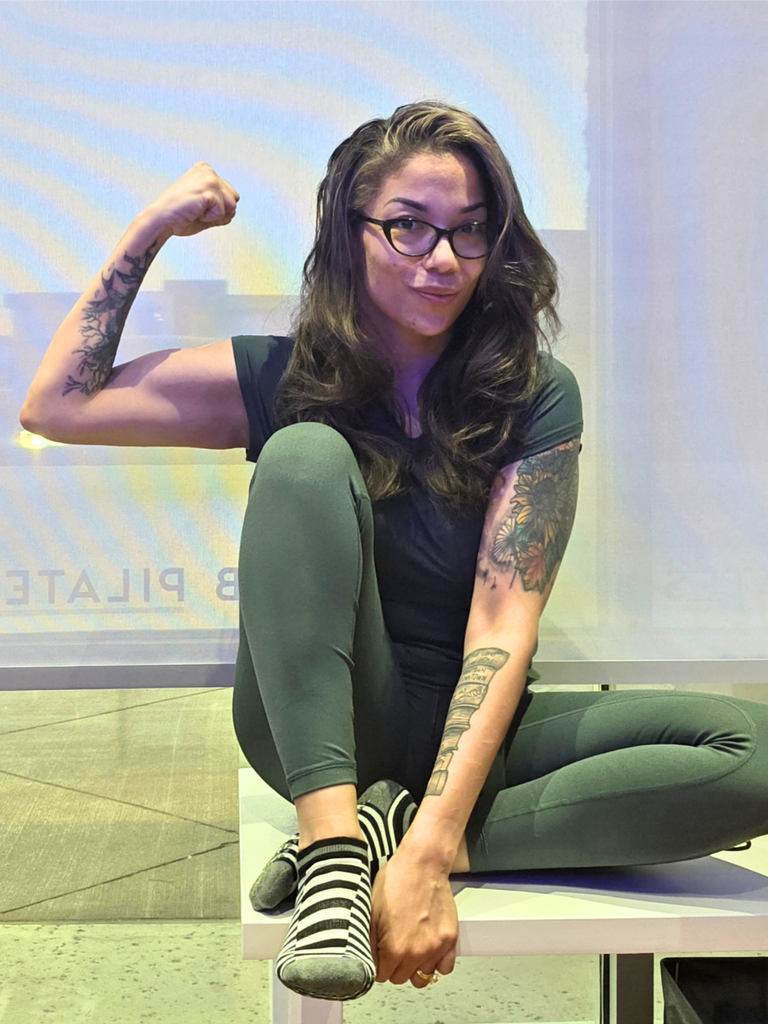
Ask her how to future-proof a workforce, and she warns you may get the long version over dinner. The enthusiasm comes from being able to turn a problem she understands into a working response.
She brings the same practical instinct to difficult days. A PMP, Tina admits she treats almost everything as a project. First, she defines what “done” looks like and what is within her control. Then she names the risks and writes down what she would do if they materialized.
“Calm isn’t the absence of problems,” she says. “It’s having a plan for them.”
The Company She Wanted
Tina Flores’s reason for joining Empressa begins with a conviction:
“Because the people shaping AI should look like the people it affects.”
For years, she has watched AI decisions being made in rooms where women were underrepresented. In hiring, those decisions determine who gets seen, who gets screened out, and what “qualified” means. She wants a hand in making them.
Her own work shows how expertise can extend beyond a title into frameworks, books, and tools. That is the possibility at the heart of the Portfolio Economy: women building assets, influence, income, and ownership from what they know. Empressa provides infrastructure for that shift, with seasoned women’s expertise helping shape its intelligence.
For Tina, the connection was also personal. She found women at different stages of life building, deciding, and moving one another forward. Here was a place to bring her judgment, alongside women equally determined to shape what comes next.
“That’s where my wisdom belongs,” she says. “Not on the sidelines explaining technology after the fact, but at the table helping shape how it serves people. The Imperial Council gives me that seat, and the company of women who are using theirs.”
Meet Tina Flores

Dr. Tina Flores is Vice President of Workforce Innovation at MPF Federal and a member of Empressa’s Imperial Council. With more than 20 years in talent acquisition, she builds hiring strategies and AI-enabled tools that bring emotional intelligence and proven capability into workforce decisions. She is the author of three books, including Good Teams by Design and Emotionally Intelligent Leadership in a Tech-Driven World.
“Stop waiting to be technical enough. Build the thing anyway.” — Dr. Tina Flores
Connect with Tina:
- Website: drtinaflores.com
- LinkedIn: https://www.linkedin.com/in/drtinaflores/
- Other social platforms: @drtinaflores